The Ultimate Guide to Hotel Reputation Management (2025 Edition)
Everything you need to know about managing your hotel's online reputation. From monitoring reviews to boosting your ADR, this is the complete playbook.
In the digital age, your hotel’s reputation isn’t what you say it is—it’s what your guests say it is.
With 93% of travelers using online reviews to make booking decisions, your online reputation is arguably your most valuable asset. It drives your occupancy, your pricing power, and ultimately, your bottom line.
This comprehensive guide covers everything you need to know to master hotel reputation management in 2025.
What is Hotel Reputation Management?
Hotel Reputation Management is the practice of monitoring and influencing how your property is perceived online. It involves:
- Monitoring: Tracking what guests are saying across all platforms (Google, Booking.com, TripAdvisor, etc.).
- Responding: Engaging with guests by replying to their feedback.
- Analyzing: Using data from reviews to improve your operations.
- Generating: Actively encouraging happy guests to leave positive reviews.
Why Does It Matter? (The ROI of Reputation)
Reputation management isn’t just about vanity metrics; it’s about revenue.
1. Higher Prices (ADR)
Research from Cornell University shows that a 1-point increase in your review score allows you to raise prices by 11.2% without losing occupancy. Read more: What the Cornell Hospitality Study Really Means for Your Hotel’s Revenue
2. More Bookings
Travelers are 3.9 times more likely to choose a hotel with higher review scores when prices are equal.
3. Better SEO
Search engines like Google prioritize businesses with high ratings and frequent review activity. Responding to reviews signals that your business is active and trustworthy.
The Core Pillars of Reputation Management
1. Monitoring: Listen to Your Guests
You can’t manage what you don’t measure. You need to know when and where reviews are posted. - Google: The first place most travelers look. - OTAs (Booking.com, Expedia): Critical for conversion. - TripAdvisor: Still a major influencer for travel planning.
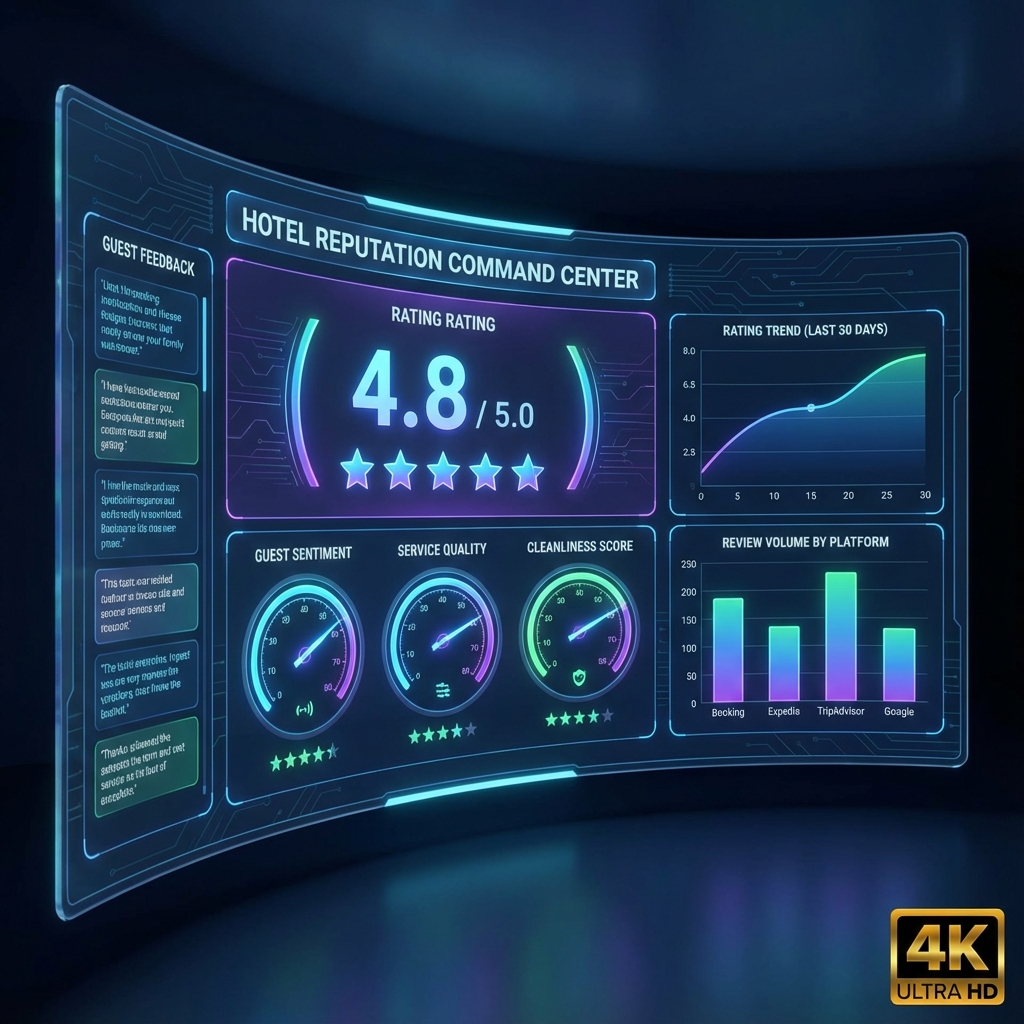
Tip: Use a centralized dashboard to see all reviews in one place.
2. Responding: The Art of the Reply
Responding to reviews is non-negotiable. It shows you care. - Positive Reviews: Thank them and reinforce the positives. - Negative Reviews: Apologize, address the issue, and take it offline. Read more: How to Respond to Negative Hotel Reviews Need templates? 15+ Essential Hotel Review Response Templates
3. Analyzing: Turning Data into Action
Reviews are free market research. - Sentiment Analysis: Are guests complaining about “cleanliness” or “service”? - Trend Tracking: Is your breakfast rating dropping over time? - Competitor Analysis: How do you compare to the hotel across the street?
4. Generating: Get More Reviews
Don’t leave your reputation to chance. Actively ask satisfied guests to share their experiences. - Post-Stay Emails: Send a friendly reminder after checkout. - QR Codes: Place them at the front desk or in the room. - Timing: Ask when the guest is happiest (e.g., after a great check-in or meal).
Choosing the Right Tools
Managing reputation manually is impossible for most busy hoteliers. That’s where technology comes in.
Review Agent is designed to streamline this entire process: - Unified Dashboard: All your reviews from Google, Booking, and TripAdvisor in one feed. - AI-Powered Responses: Draft professional responses in seconds. - Deep Analytics: Understand your guest sentiment at a glance.
Read more: How to Choose the Best Multi-Location Reputation Management Tool
Conclusion
Your online reputation is a living, breathing thing. It requires constant attention and care. But the rewards—loyal guests, higher revenue, and a thriving business—are well worth the effort.
Start today by responding to your latest review. Your future guests are watching.
Share this Article
Link copied!